Understanding The Challanges
In my last message, we highlighted the three key facts fundamentally changing our sport: the Athlete Arms Race, the new Roster Caps, and the House Settlement.
Today, I want to explain how the Athlete Arms Race and the Roster Cap have intersected and fundamentally changed rowing at Wisconsin.
The Athlete Arms Race began in the early 1990s as a way to make boats faster, and it worked. But it didn’t just raise the “ceiling” of the sport; it completely redefined the baseline.
- In 1995, the Varsity 8 National Champion (Brown) won the IRA with a world-class boat rowing 5:31.3.
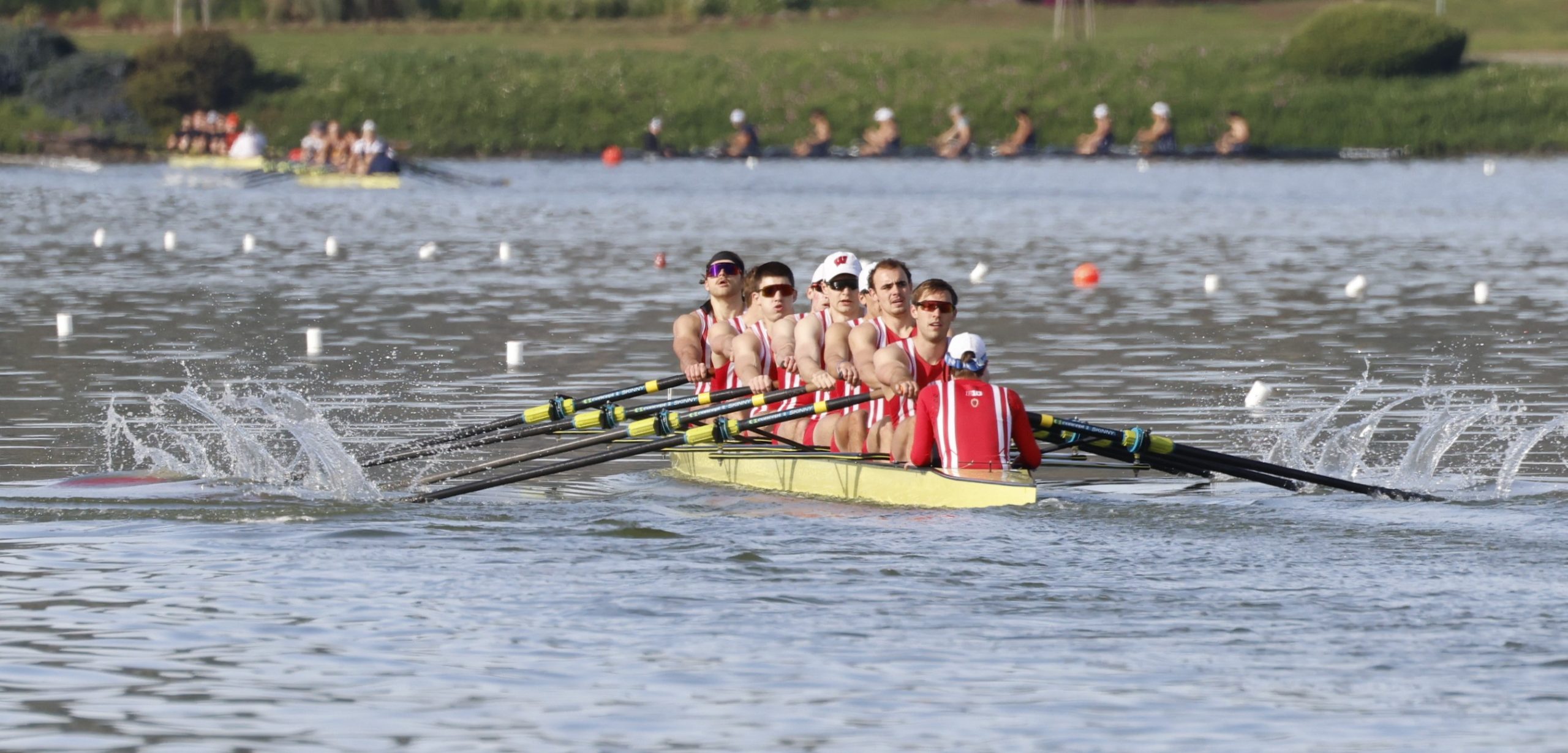
- At the 2025 IRA, the winner of the 3V (the third world, guys!) (Harvard) clocked a 5:29.06. Think about this….the third world boat today, would beat the national champion from 1995. (You may not know, but there are no longer freshmen boats).
- To emphasize how deep the talent goes, the 22nd place Varsity 8 from 2025 would have been racing in the Grand Final in 1995! Not to mention there weren’t 24 crews at the IRA in 1995.
Sure, some of us were fast in our day, but the Rose Bowl Champions from the 1970s would not stand a chance against any of today’s Power 5 football teams. Like all sports, collegiate rowing has fundamentally changed. The competition is incredibly fast, but not just the top 5 or 6 crews, but the top 20 teams, and not just their Varsity 8s, but they are fast all the way down to the 3Vs. To be clear, we have not gotten slower, in fact, Wisconsin has gotten faster, the competition has just gotten much faster.
Sports across the board have fundamentally changed, from youth all the way through high school. Rowing is no exception. High school rowing in the US has exploded, increasing the domestic competition. Meanwhile, Great Britain, Germany, Netherlands, Australia, and New Zealand have shifted to centralized national training programs in which young athletes, usually 16 or 17 years old, are identified and moved into full time training programs. This is why the fastest collegiate boats in the US are filled with international athletes–they are professionals.
The competition is simply on a different level today compared to 30 years ago.
The Intersection of the Arms Race and the Roster Caps is where things get interesting.
Historically, we managed this environment with a squad of 80+ guys. We could take a big, strong “project” athlete and spend three years developing him into a champion. But we are now down to 40 guys. If we want to be competitive in this environment Beau needs:
- Incoming athletes who contribute to boat speed on Day 1
- Certainty that the incoming athletes can produce boat speed–they are proven
- Very high confidence that they will row all four years
The Way Forward: If we want a competitive team, we must combine elite talent with incredibly high potential and committed walk-ons.
We will always bring on walk-ons—that is the Badger way–they will learn faster and need to reach the high bar set by the recruited athletes, but we will find the kids that can do it.
In a follow-up blog, I will explain what it takes to recruit the right athletes, what our competitors are doing, and our plan going forward.
We are adapting to the speed of the modern game. Thank you for helping us stay in the hunt.
SUPPORT
Wisco Rowing
Wisconsin Rowing’s strength has always come from its people—oars in the water, pulling as one. As we look to the future, your involvement is more important than ever. Whether through financial support or lending your time and talent, there are meaningful ways for every alum to contribute to the continued success of the program.